

Sant MS Forged Pipe Fittings
Drop-forged carbon-steel pipe fittings from Sant (Jalandhar, manufacturing since 1953) — threaded 1000 LBS to IS-1239 (Part-II) with BSP threads per BS21 / IS:554, and socket-weld 3000 LBS Class 20 to IS:4712:1984 with ends to ANSI B16.11. Sizes 1/4" (8NB) to 3" (80NB). Genuine Sant material, ready stock at our Delhi warehouse, Test Certificates with every consignment.
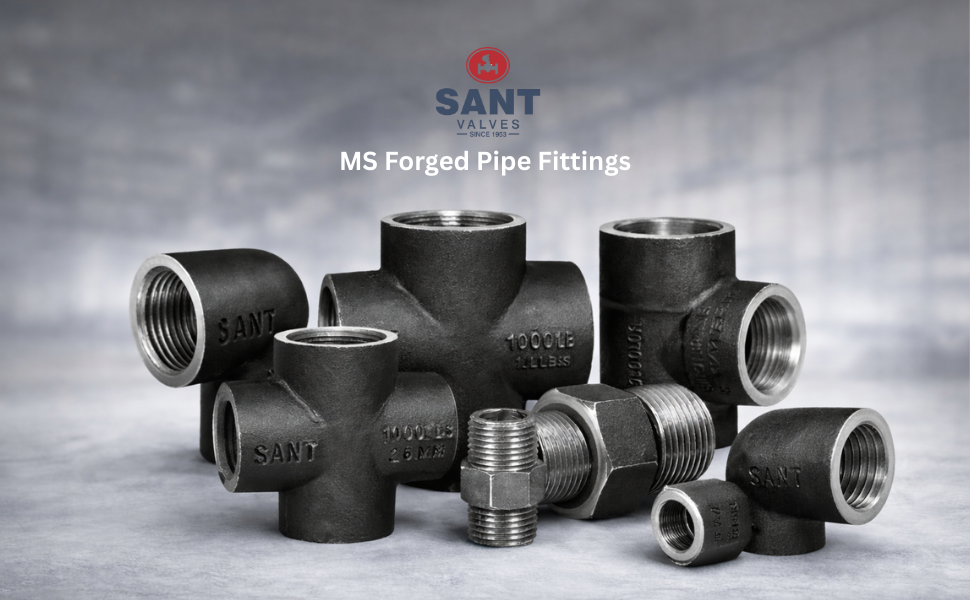
Understanding MS Forged Pipe Fittings
A forged fitting starts life as a solid carbon-steel billet. The billet is heated and hammered between shaped dies — drop forging — until the metal flows into the form of the elbow, tee or socket. Because the steel is deformed in the solid state rather than poured molten into a mould, its internal grain bends and follows the contour of the part. Metallurgists call this continuous grain flow, and it is the single biggest reason a forged fitting outperforms a cast one: there are no internal voids, no shrinkage cavities, and no porosity for pressure to find.
For a buyer, the difference shows up in how the fitting fails — or rather, how it doesn't. A casting under over-pressure, water hammer or impact tends to crack suddenly, because any internal defect acts as a crack starter. A forged-steel fitting deforms before it fails, tolerates vibration and mechanical shock, and holds machined threads better because the threads are cut into dense, defect-free material. This is why MS forged fittings are the industry default for pressurised small-bore piping — compressed air, water, steam-condensate, hydraulic and fire-protection lines — while cast fittings are confined to drainage and very low-pressure water service.
MS Forged Steel this range
- Made by: drop-forging solid carbon-steel billets — continuous grain flow, no porosity.
- Behaviour: ductile; deforms rather than shatters; takes vibration, impact and water hammer.
- Joints: threaded (BSP) or socket-weld; 1000 LBS and 3000 LBS hydro-test classes.
- Use for: compressed air, water, condensate, hydraulic, fire-fighting and process small-bore lines.
Malleable Iron (GI)
- Made by: casting white iron, then annealing it for days to restore some ductility.
- Behaviour: tougher than grey cast iron, but well below forged steel; threads are cast-then-machined.
- Joints: threaded only; typically galvanised ("GI fittings", banded pattern).
- Use for: plumbing, low-pressure water and gas distribution where cost rules.
Grey Cast Iron
- Made by: pouring molten iron into a mould — porosity and shrinkage defects are inherent risks.
- Behaviour: brittle; cracks suddenly under impact, bending or pressure shock.
- Joints: threaded or flanged; lowest cost of the three.
- Use for: drainage and gravity lines only — never compressed air or pressure service.
How a Sant forged fitting is made
Carbon-steel bar stock is cut to weight and induction-heated to forging temperature.
The hot billet is hammered between shaped dies — the grain flows into the geometry of the fitting.
Flash (excess metal squeezed out at the die parting line) is trimmed off and the forging is normalised.
Ends are faced; BSP threads are cut and checked with calibrated gauges per BS21 / IS:554, or sockets recessed to ANSI B16.11.
Every class is proof-tested — 1000 psig threaded, 3000 psig socket-weld — before despatch.
Brand, size and class are forged into the body; the batch ships with its Test Certificate.
Within the forged family, Sant manufactures two tiers: 1000 LBS threaded fittings to IS-1239 (Part-II) for serviceable, re-openable joints, and 3000 LBS socket-weld fittings to IS:4712:1984 for permanent welded pipework. Which tier fits your job — and how to install each correctly — is covered in the selection guide below; the metallurgy, chemistry and standards detail sits under Standards & Material.
Threaded Fittings — 1000 LBS (IS-1239 Part-II)
Drop-forged carbon-steel threaded pipe fittings with BSP parallel female ends, hydro-tested at the 1000 LBS class. Each fitting is forged from solid steel billet — continuous grain flow, no porosity — and the threads are precision-cut and gauge-checked. Suited to serviceable connections in water, air, instrument and steam-condensate lines from 1/4" (8NB) through 3" (80NB).
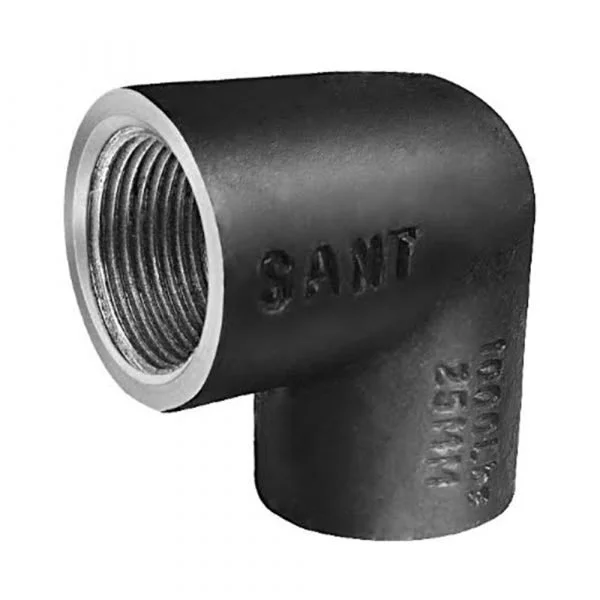
Elbow
Threaded 90° turn for redirecting the line where the joint must remain serviceable.
View price →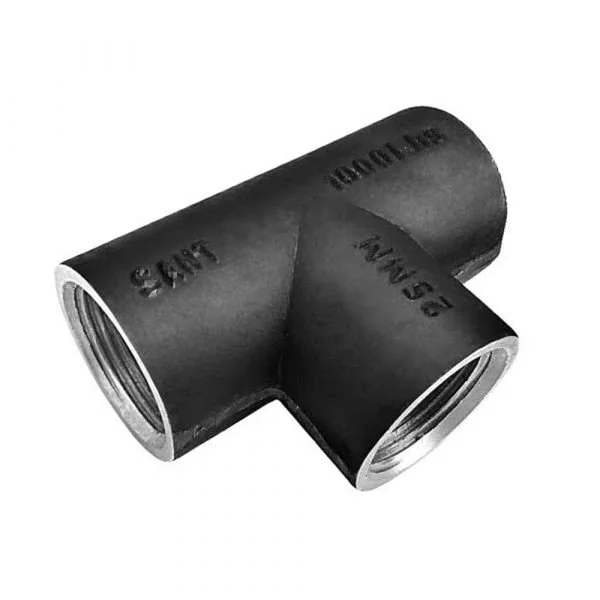
Tee
Threaded three-way connection for branching a take-off from the main run.
View price →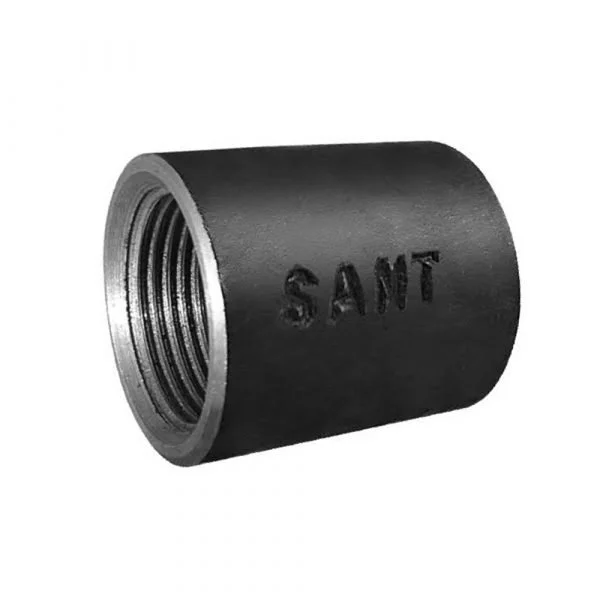
Socket
Female-threaded straight coupler joining two male-threaded pipe ends in line.
View price →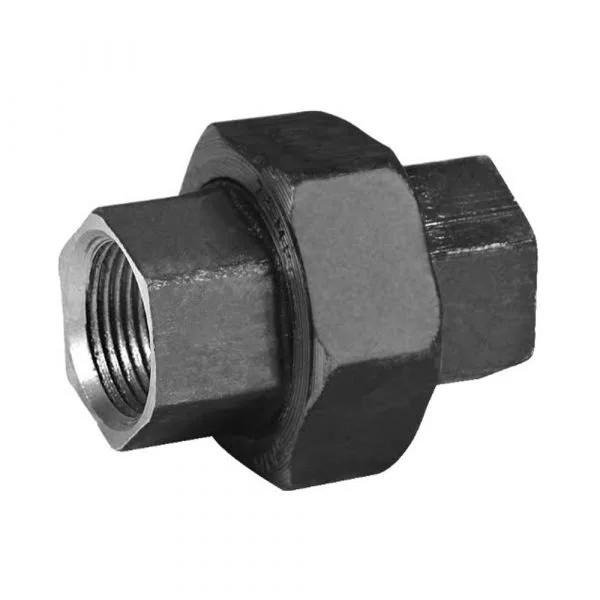
Union
Two-piece threaded joint that lets you dismantle and reconnect lines without disturbing pipe alignment.
View price →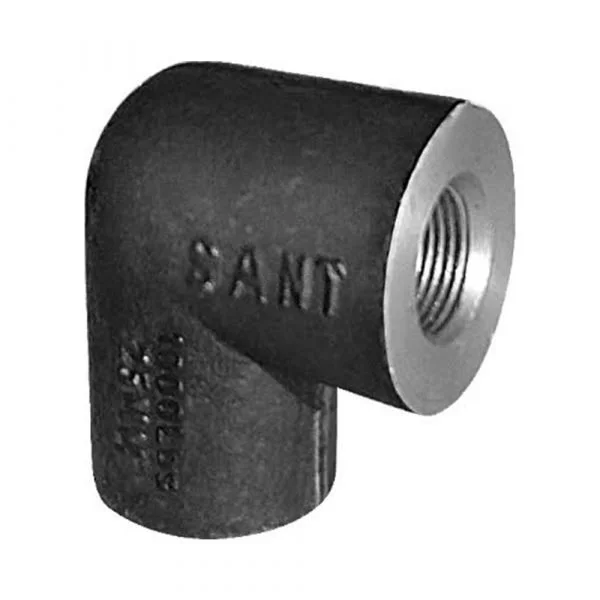
Reducing Elbow
Combines a 90° turn with a step-down to a smaller bore in a single fitting.
View price →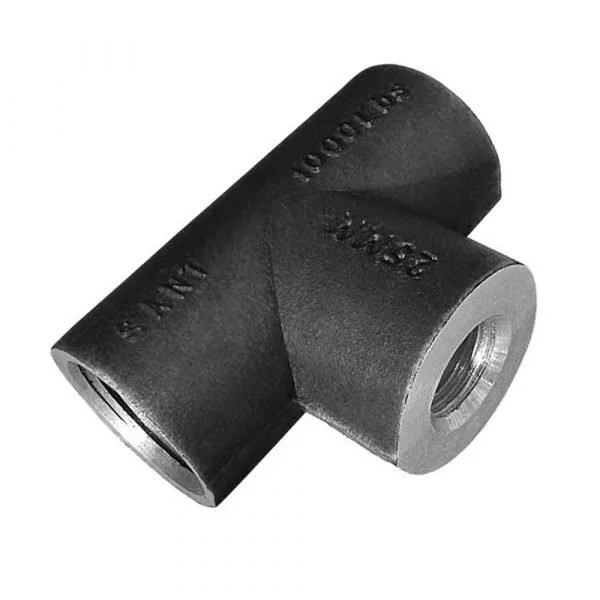
Reducing Tee
Branches the run while reducing the take-off to a smaller bore on the side outlet.
View price →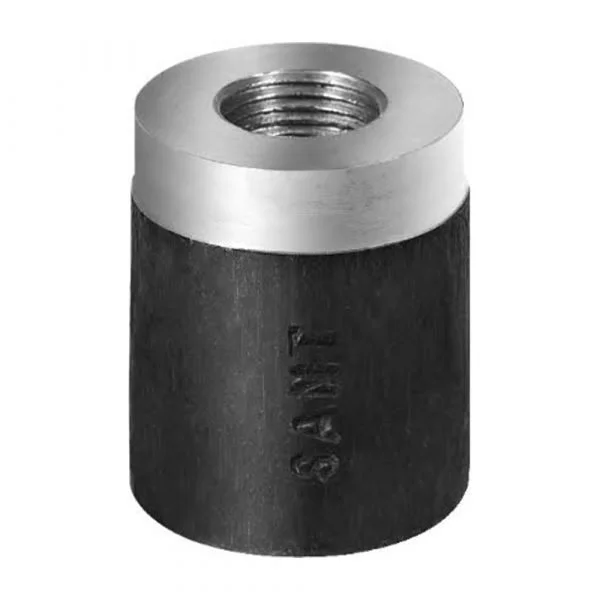
Reducing Socket
Female-threaded straight coupler joining two pipes of different bore in line.
View price →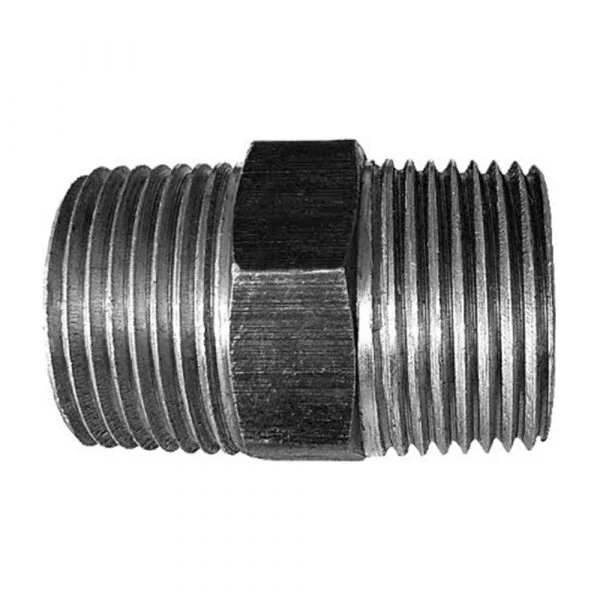
Hex Nipple
Male-threaded both ends with a central hex flat, for joining two female fittings directly.
View price →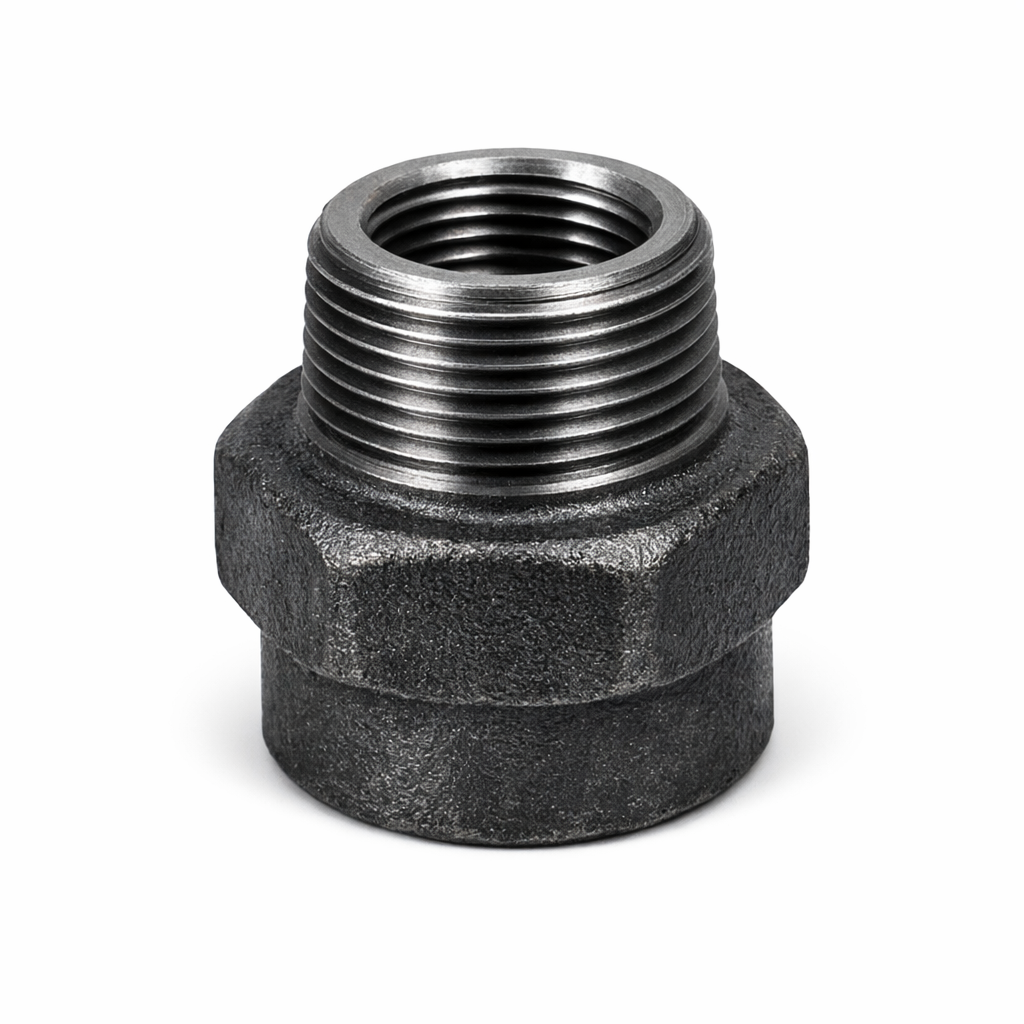
Reducing Bush
Male-x-female transition adapter between two thread sizes in a single piece.
View price →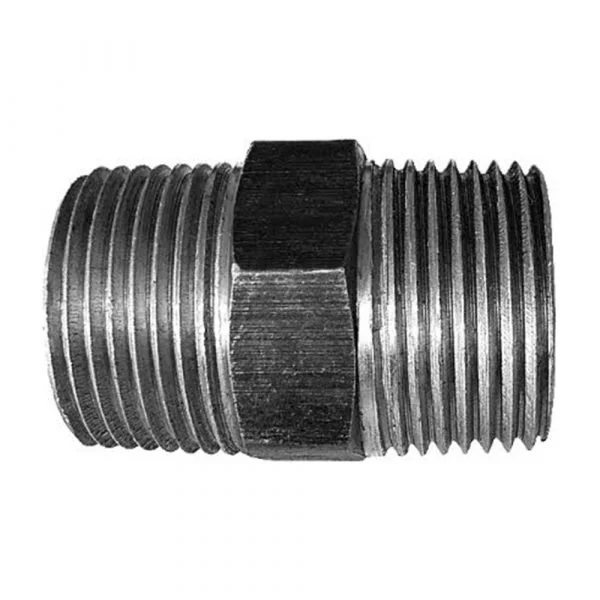
Reducing Hex Nipple
Male-male nipple with two different thread sizes for inter-size run joints.
View price →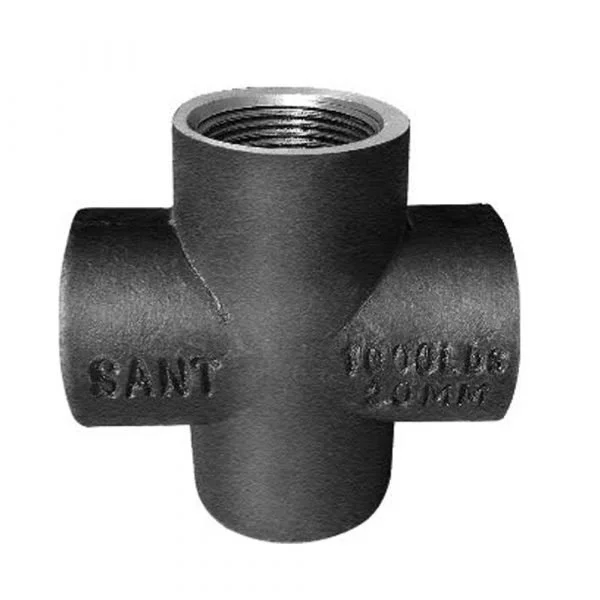
Cross
Four-way branch at a single point — used in headers and manifold tap-offs.
View price →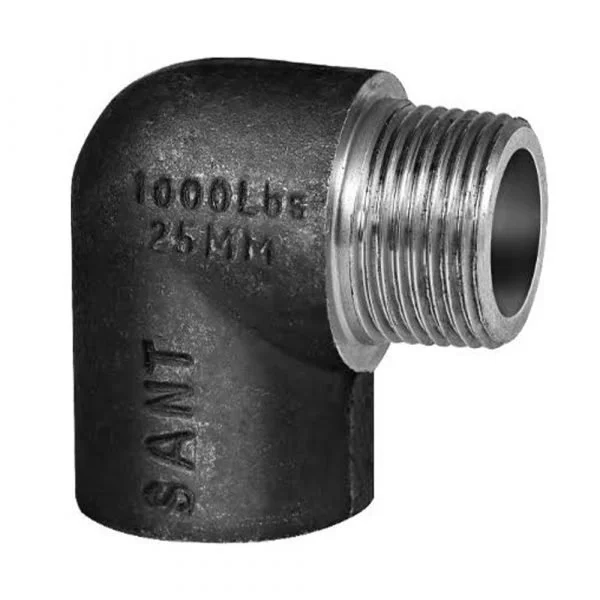
M/F Elbow
90° turn with one male and one female end for inline thread continuation.
View price →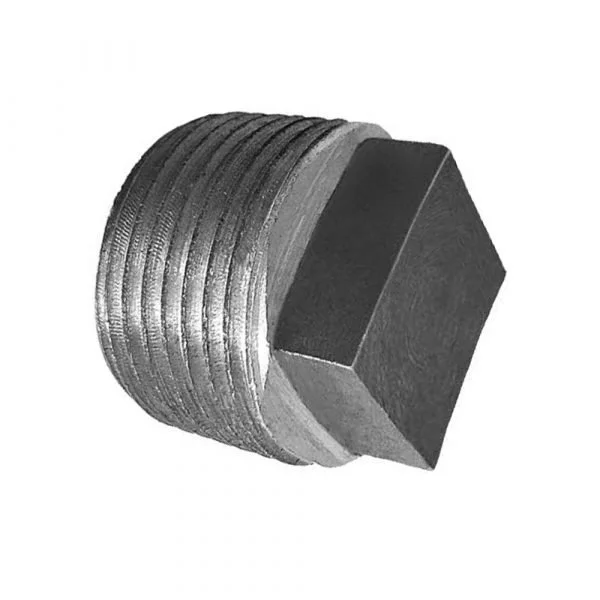
Plug
Solid male-threaded plug that blanks off a female-threaded port at the line end.
View price →
Reducing Cross
Four-way branch with one or more reduced ports for asymmetric header take-offs.
View price →Socket-Weld Fittings — 3000 LBS, Class 20 (IS:4712:1984)
Heavier-class drop-forged socket-weld fittings hydro-tested at the 3000 LBS Class 20 rating, with socket-weld end dimensions to ANSI B16.11. The pipe is inserted into a recessed socket and fillet-welded, giving a permanent leak-free joint suited to compressed-air mains, hydraulic lines and small-bore process piping. Sizes 8NB through 50NB, with select items extending to 65NB.
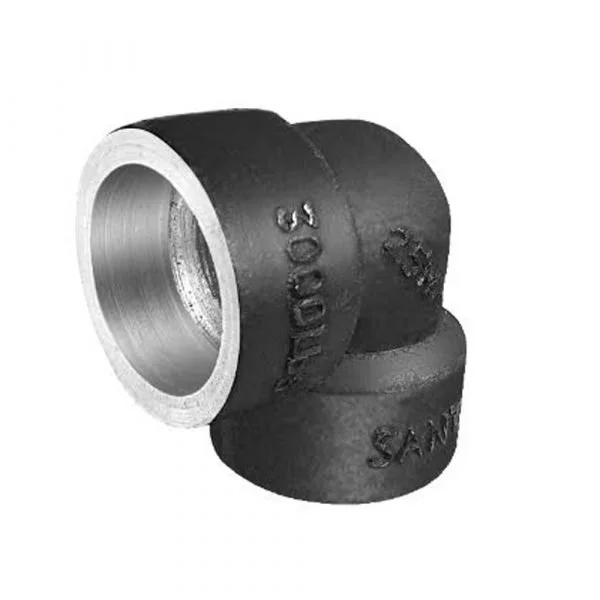
S.W. Elbow
Permanent welded 90° direction change with a recessed socket joint at each end.
View price →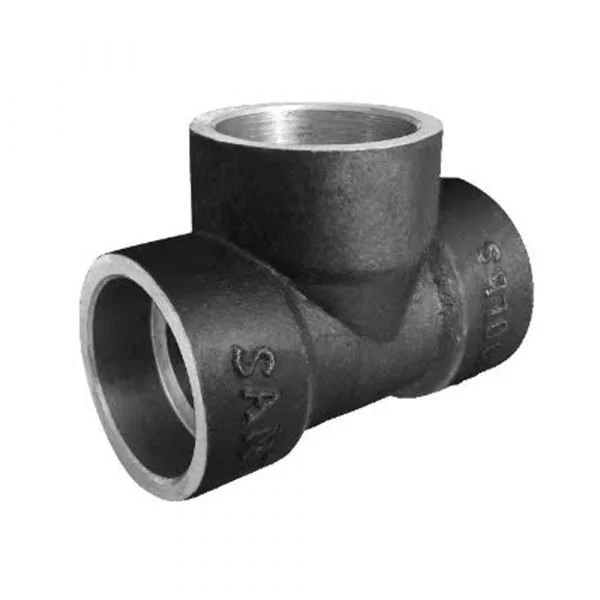
S.W. Tee
Permanent welded three-way branch with three recessed socket joints.
View price →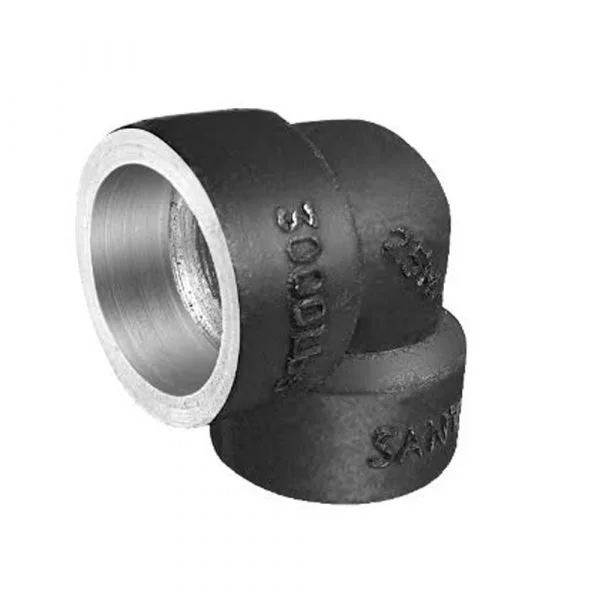
S.W. Reducing Elbow
Welded direction change that simultaneously steps down to a smaller bore.
View price →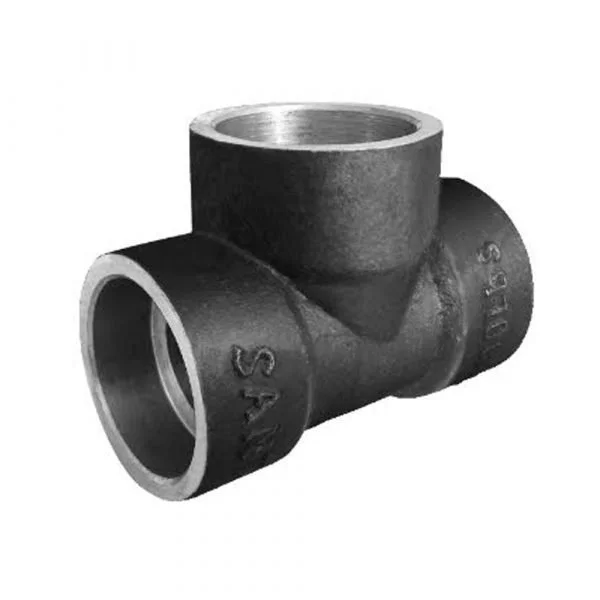
S.W. Reducing Tee
Welded branch where the side outlet is reduced to a smaller bore.
View price →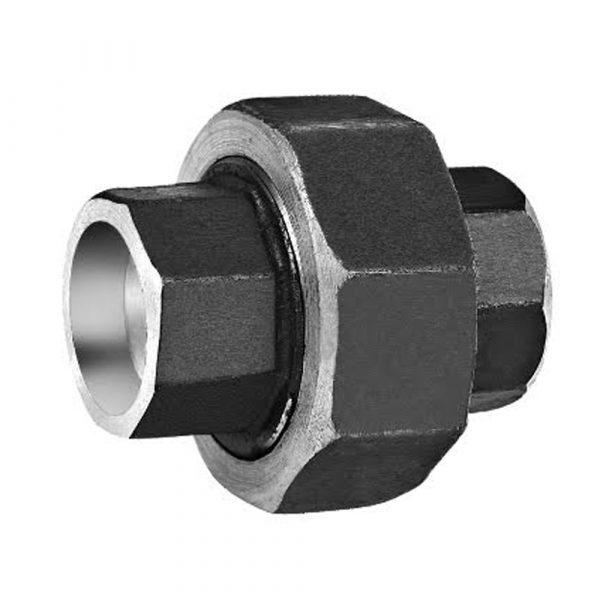
S.W. Union
Dismantle-and-remake joint between two socket-welded sections of pipework.
View price →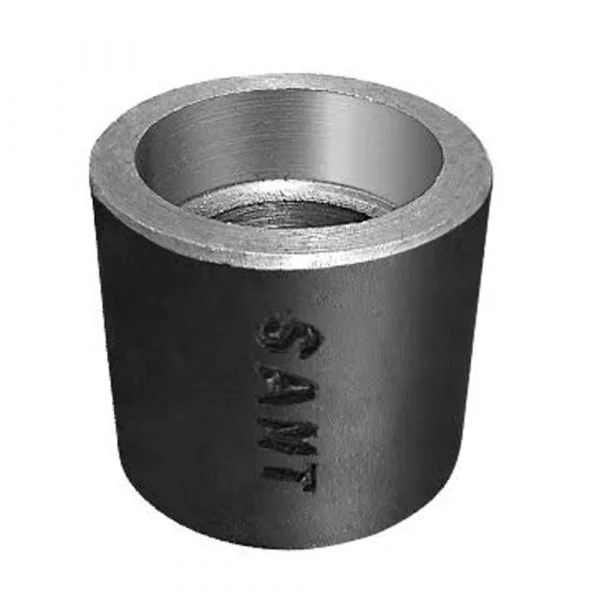
S.W. Socket
Straight welded coupling joining two pipe ends inside a recessed socket.
View price →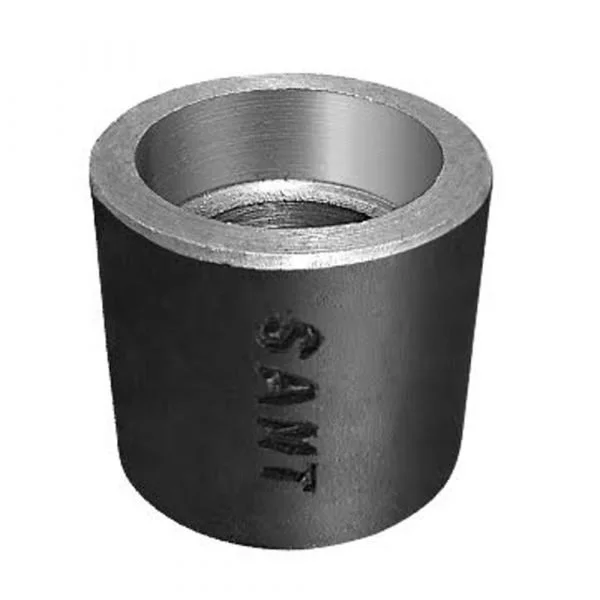
S.W. Reducing Socket
Straight welded coupling between two pipes of different nominal bore.
View price →Get a Quote on Sant Forged Fittings
Send your requirement — itemised quote on WhatsApp in 3–4 hours during business hours.
Choosing & Installing — Threaded vs Socket-Weld
Choose Threaded (1000 LBS) when…
- The joint may need to be opened later — instrument tap-offs, pressure-test points, pump and equipment connections.
- The line is galvanised — threading avoids welding over zinc, which damages both the weld and the coating.
- Hot-work permits are difficult on site — threaded make-up needs no welder, no power, no fire watch.
- Service is small-bore water, compressed air or condensate at moderate pressure.
Choose Socket-Weld (3000 LBS) when…
- You want a permanent, leak-free joint with no thread path for seepage — hydraulic and compressed-air mains, process lines.
- Pressure or vibration is higher than a threaded joint should carry long-term.
- The line will be pressure-tested and forgotten — no future dismantling planned (use an S.W. union where one break-point is needed).
- Qualified welding and fit-up control are available on site.
BSP, BSPT or NPT — getting the thread right
More small-bore leaks trace back to mismatched thread standards than to any defect in the fitting. Sant threaded fittings are supplied with BSP parallel female threads (British Standard Pipe, 55° Whitworth form, cut to BS21 / IS:554) — the default across Indian industrial pipework. BSPT is the taper version of the same 55° form: taper-into-parallel joints make up tightly and are common on Indian- and European-origin equipment. NPT (American standard, ANSI B1.20.1) looks similar but uses a 60° thread form with a different pitch — an NPT male will start in a BSP female, feel tight, and weep forever, because the flanks never seat.
The rule: never mix the two families. If the mating equipment is NPT — common on imported compressors, instruments and American-spec packages — order the fittings with NPT threading (Sant cuts NPT/BSPT on indent at 25% over list). If you are unsure what a flange-less piece of equipment carries, gauge it or check its data plate before ordering; "it threads on" is not confirmation.
Installation practice that protects the joint
Threaded joints: start with clean, undamaged threads — a dropped fitting with a bruised lead thread should be set aside, not forced. Wrap PTFE tape in the direction of the thread (clockwise, looking at the open end of the pipe) and keep it off the first thread so shreds don't enter the line. Make up hand-tight plus a controlled wrench pull; if a BSP joint weeps on test, break it, re-tape and re-make it — over-tightening a parallel thread to chase a leak only galls the threads and makes the next make-up worse.
Socket-weld joints: seat the pipe to the bottom of the socket, then withdraw it roughly 1.5 mm before tacking. That small gap is standard ANSI B16.11 practice — it leaves room for the pipe to expand as the fillet weld cools, and prevents the root cracking that a hard-bottomed joint invites. Size the fillet weld at about 1.1× the pipe wall, and never bridge the gap with sealant or filler before welding. If a galvanised component must be welded, grind the zinc back from the weld zone first: welding over zinc produces porous welds and hazardous fume.
Traceability: Sant forged fittings carry the brand and size forged into the body. Match those heat marks against the Test Certificate supplied with the consignment and file the TC in the project QA dossier — on IBR, fire-protection and audited industrial work, the paperwork is as much a part of the fitting as the steel.
Five specification mistakes to avoid
Cast or malleable fittings on compressed air. Brittle materials fail explosively under air pressure. Specify forged steel for every air main, no exceptions.
Mixing NPT and BSP. The threads start into each other and never seal. Confirm the standard on the mating equipment before the PO, not after the leak.
Seal-welding a threaded joint to stop a weep. Welding over a taped, doped thread traps contaminants and cracks. Re-make the joint properly or change to socket-weld.
No union in a welded line. An all-welded run with no S.W. union means cutting pipe the first time a strainer, gauge or in-line component needs service. Place a union at every maintainable item.
Accepting material without the TC. On IBR, fire and audited industrial work the Test Certificate is part of the supply. Insist on it with the consignment — retro-fetching paperwork rarely works.
Standards & Material — Sant MS Forged Pipe Fittings
Threaded — IS-1239 (Part-II): 1992
- Drop-forged carbon steel; sulphur and phosphorus each at most 0.06%.
- Screwed female ends to BSP per BS21 / IS:554 — gauge-checked.
- NPT (ANSI B1.20.1) and BSPT thread variants on request.
- Pressure class: 1000 LBS (hydro-test designator).
- Hydro-tested at 1000 psig (≈ 70 bar) before dispatch.
- Galvanised finish available on indent.
Socket-Weld — IS:4712: 1984, Class 20
- Forged carbon steel; chemistry C ≤ 0.30%, Mn 0.60–1.05%, P ≤ 0.04%, S ≤ 0.05%, Si ≤ 0.35%.
- Socket-weld end dimensions to ANSI B16.11 — gauge-checked.
- Pressure class: 3000 LBS Class 20 (hydro-test designator).
- Hydro-tested at 3000 psig (≈ 210 bar) before dispatch.
- Pipe inserted into recessed socket and fillet-welded for permanent joint.
- Black finish standard; galvanising on indent.
Why forged — and what the pressure class really means
The Sant range comprises drop-forged carbon-steel pipe fittings. In drop forging, a heated steel billet is hammered between dies that mirror the finished shape. Unlike casting, where molten metal solidifies inside a mould, forging deforms solid metal — the internal grain follows the contour of the part, producing what metallurgists call continuous grain flow. The result is a fitting with no porosity, no shrinkage cavities, and a substantially higher strength-to-weight ratio than a cast equivalent. For pressurised service — water, air, oil, condensate — forging is the industry default; cast fittings are reserved for very low-pressure water lines only.
The class designation — 1000 LBS for threaded fittings to IS-1239 (Part-II), 3000 LBS Class 20 for socket-weld fittings to IS:4712:1984 — is a hydro-test pressure designator, not a hard maximum working pressure. Each fitting is subjected to that pressure at the factory as a structural-integrity check. The actual operating pressure of an installed joint depends on the connected pipe wall thickness, the service temperature, the medium, and the joint type. The class number is best understood as a strength tier and a procurement reference rather than an absolute working-pressure ceiling.
Choosing between the two formats is largely a question of serviceability versus permanence. Threaded fittings join via BSP parallel threads sealed with PTFE tape or pipe dope; the joint can be opened, inspected and re-made, which suits instrumentation tap-offs, hydraulic test points, small-bore water lines and low-pressure condensate piping. Socket-weld fittings are inserted into the pipe end and fillet-welded; the joint is permanent and leak-free, which suits compressed-air mains, hydraulic and small-bore process service where occasional disassembly is unnecessary. Sant supplies BSP parallel threading as standard per IS-1239 (Part-II) with threads cut to BS21 / IS:554; NPT (ANSI B1.20.1) and BSPT (BSP taper) thread variants are available on indent at a 25% surcharge over the published rate list, useful when matching imported equipment that uses NPT taps.
Sant — manufacturing forged pipe fittings since 1953 at Jalandhar, Punjab — is an ISO 9001 certified manufacturer with the I.B.R. mark, per the manufacturer's published catalogue. Every consignment dispatched from our Hauz Qazi warehouse in Delhi is accompanied by the manufacturer's original Test Certificate (TC) recording the hydro-test pressure, heat-batch identification, and chemistry / dimensions against the relevant IS standard.
Dimensional Data — Sant MS Forged Pipe Fittings
How to read these dimensions
Almost every figure below is a centre-to-face length: the distance from the centre of the fitting to the face of its end, in millimetres. It is the length a fitting adds to your pipe run — when you take off quantities or set out a line, add this much at every elbow, tee or cross.
Sizes are nominal bore (NB). For reducing items the larger size is written first (25×15 = 25NB run, 15NB outlet). Figures are manufacturer-published minimums; for fabricated assemblies, confirm finished take-out lengths against the stamped Test Certificate.
Elbow · Tee · Cross — centre-to-face
The distance from the centre of the fitting to the face of each threaded end — the length an elbow, tee or cross adds at every change of direction in your pipe run.
Same dimension series applies to Elbow, Tee and Cross. Cross is manufactured up to 50NB only.
Socket — outside diameter & length
How fat and how long the coupling body is — useful for clearance checks in tight pipe racks.
Union — end-to-end length
Total length of the assembled union — the gap to leave in the line when planning a dismantling joint.
Reducing Elbow — centre-to-face
Centre-to-face on each end. The small end matches the smaller pipe; the large end matches the bigger one.
Reducing Tee — centre-to-face
Centre to the reduced branch outlet, and centre to each run face. Run faces follow the larger (run) size.
Reducing Socket — overall length
Overall length of the reducing coupling — the make-up length between the two different pipe sizes.
Hex Nipple — length & spanner size
"Spanner" is the width across the hexagon flats — the wrench size that fits it. Length is overall, thread to thread.
Plug — thread length & head
Thread length is how deep the plug screws in; head is the square boss (width × height) you grip to tighten.
M/F Elbow — centre-to-face
Centre-to-face measured separately on the female (socket) end and the longer male (threaded spigot) end.
Reducing Bush — length & spanner size
Overall length of the bush and the wrench size across its hexagon flats.
Socket-Weld Elbow · Tee · Socket — socket seat
"Pipe seat" is the socket bore the pipe slips into (matches pipe OD); "depth" is how far the pipe seats in before the fillet weld.
Bore tolerance shown min–max per IS:4712 / ANSI B16.11. Same socket-end series applies to S.W. Elbow, Tee and Socket (incl. reducing types on the relevant end).
Socket-Weld Union — end-to-end length
Total length of the assembled S.W. union — the gap to leave when a welded line needs a dismantling point.
Where Sant MS Forged Pipe Fittings Are Used
Sant MS forged pipe fittings serve as the small-bore connection components across a wide range of industrial and infrastructure piping. The threaded 1000 LBS range tends to cover serviceable joints in water, air, instrument and condensate lines, while the socket-weld 3000 LBS range handles permanent joints in higher-pressure welded pipework. A short summary of typical applications:
Fire-fighting & Sprinkler Networks
Ancillary tap-offs, instrument lines and test stations on hydrant and sprinkler mains where the joint may need to remain serviceable.
Oil & Gas Lines
Small-bore process and instrument piping on plant utilities, gauge connections, and condensate drains around upstream and midstream pumping skids.
HVAC & Mechanical Services
Chilled-water and hot-water reticulation, condensate trap stations, expansion tank connections and small-bore mechanical service lines in building services.
Industrial Process & Utility Piping
Plant-utility air, water and instrument headers, gauge tap-offs, blowdown lines and small-bore process tie-ins around tanks and exchangers.
Power & Infrastructure
Auxiliary water and air lines, instrument impulse piping, drain and vent connections in power station balance-of-plant and infrastructure projects.
Water Distribution & Pumping
Pump-house headers, instrument and gauge connections, small-bore branches and consumer-end tap-offs on municipal and industrial water distribution mains.
The threaded range covers 8NB to 80NB and the socket-weld range covers 8NB to 50NB with select items to 65NB; in most distribution-pipe applications these two formats together absorb the full small-bore fittings BOQ, with larger sizes handled by butt-weld or DI fittings depending on the medium and standard.
Why VSC for Sant MS Forged Pipe Fittings
Complete range, one stop
Full threaded and socket-weld range from 8NB through 80NB on the floor — no part-shipments, no chasing odd sizes.
Genuine Sant material
Sourced through the manufacturer's regular trade chain; every consignment ships with the original Test Certificate.
GST-compliant invoicing
Correct HSN codes and tax invoice with every dispatch — clean documentation for vendor portals and audits.
3–4 hour WhatsApp quote
Send your BOQ on WhatsApp and receive an itemised quote with rates, GST and freight inside business hours.
Ready Delhi stock
Hauz Qazi warehouse, Delhi 110006 — same-day dispatch standard against a confirmed Proforma Invoice.
Trading since 1961
Three-generation pipeline-products house with long-standing relationships across manufacturer trade chains.
Explore more
Sant MS Forged Fittings — Price List (01.04.2026)
Current per-piece rates across all threaded (1000 LBS) and socket-weld (3000 LBS) items, with the standard 60% trade discount.
View price list →Sant DI Pipe Fittings — Price List
UL/FM-approved ductile iron pipe fittings price list — Sant's alternative range for fire-protection and water supply mains.
View DI fittings price list →Request a Detailed Quote / Send Your BOQ
Have a multi-line BOQ? Paste it below — full landed-price quote on WhatsApp in 3–4 hours.
Quick Glossary — Forged Fittings Terms
Frequently Asked Questions
What does "drop forged" mean on a pipe fitting?
Drop forging shapes a heated solid steel billet between dies under hammer blows — the metal is never melted and poured. The steel's internal grain flows along the shape of the fitting (continuous grain flow), leaving no porosity or shrinkage cavities. The result is a denser, tougher fitting that deforms rather than cracks under pressure shock, which is why forged fittings are the default for pressurised small-bore piping.
What is the difference between forged, malleable iron and cast iron fittings?
Forged MS fittings are hammered from solid carbon steel — strongest and most ductile of the three, suited to pressure, vibration and impact. Malleable iron (GI) fittings are castings annealed to restore some toughness — adequate for plumbing and low-pressure water or gas. Grey cast iron is poured into moulds and stays brittle — drainage and gravity lines only, never compressed air or pressure service. For industrial pressure piping, forged steel is the safe specification.
What standards do Sant MS forged pipe fittings follow?
Sant's threaded MS forged pipe fittings are manufactured to IS-1239 (Part-II) in the 1000 LBS pressure class, with female screwed ends to BSP per BS21 / IS:554. Socket-weld fittings are manufactured to IS:4712:1984 in the 3000 LBS Class 20, with socket-weld end dimensions to ANSI B16.11. Sant is an ISO 9001 certified manufacturer with the I.B.R. mark per the manufacturer's published catalogue. Original Test Certificates accompany every consignment dispatched from our Delhi warehouse.
What is the difference between 1000 LBS threaded and 3000 LBS socket-weld?
1000 LBS threaded fittings use BSP parallel threads to IS-1239 (Part-II) and are removable — they suit small-bore lines where the joint may need to be opened later. 3000 LBS socket-weld fittings to IS:4712:1984 are inserted into the pipe and fillet-welded for a heavier-wall, leak-free permanent joint suited to higher-pressure welded pipework. The class number refers to manufacturer hydro-test pressure (a test-pressure designator), not a hard working-pressure limit.
What sizes are Sant MS forged fittings available in?
Sant MS forged threaded fittings cover 1/4 inch (8NB) through 3 inch (80NB) — ten nominal bore sizes in the principal range. Socket-weld fittings run 8NB through 50NB with select items to 65NB. Not every fitting is made in every size — reducing variants typically begin at 10×8NB and unions stop at 50NB. WhatsApp +91-9999889008 with your specific size requirement and we will confirm stock availability for any odd combinations.
BSP or NPT threads — which does Sant supply?
Sant supplies BSP parallel threading as standard per IS-1239 (Part-II), with threads cut to BS21 / IS:554 and gauge-checked at the factory. NPT (ANSI B1.20.1) and BSPT (BSP taper) thread variants are available on indent against a 25% surcharge over the published rate list — useful when matching imported equipment that uses NPT taps. Lead times for thread variants typically run an additional 2 to 4 weeks beyond standard stock dispatch.
What material are Sant MS forged fittings forged from?
All Sant MS forged pipe fittings are drop-forged from carbon steel. Threaded fittings to IS-1239 (Part-II) carry maximum sulphur and phosphorus limits of 0.06% each. Socket-weld fittings to IS:4712:1984 carry a tighter chemistry: carbon ≤ 0.30%, manganese 0.60–1.05%, phosphorus ≤ 0.04%, sulphur ≤ 0.05%, silicon ≤ 0.35%. Forging gives continuous grain flow and no porosity — significantly stronger than a cast fitting of equivalent size.
Do you provide Test Certificates with Sant forged fittings?
Yes — every consignment of Sant MS forged fittings dispatched from our Delhi warehouse is accompanied by the manufacturer's original Test Certificate (TC). The TC records the hydro-test pressure (1000 LBS for threaded, 3000 LBS for socket-weld), heat-batch identification, and the chemistry and dimensions against the relevant IS standard. For pre-approved vendor lists or third-party inspection (TPI) requirements, request the TC reference at the time of order.
Where can I see current Sant MS forged fittings prices?
Current per-piece rates with our standard 60% discount are published on our dedicated Sant MS Forged Fittings price list page (effective 01 April 2026). That page is updated within 48 hours of receiving a new manufacturer revision and it covers all threaded and socket-weld items across every published size. WhatsApp +91-9999889008 with your itemised BOQ for a fully landed-price quote including GST and freight.
Do you stock the full Sant MS forged range in Delhi?
Yes — the full threaded and socket-weld range listed on this page is held as ready stock at our Hauz Qazi warehouse in Delhi 110006. Same-day dispatch is standard against a confirmed Proforma Invoice during business hours. For unusually large quantities, odd sizes or thread variants (NPT / BSPT) we coordinate directly with the manufacturer — WhatsApp +91-9999889008 to confirm timeline and quantity.
Ready to Specify Sant MS Forged Fittings?
Quote in 3–4 hours via WhatsApp during business hours (Mon–Sat, 10 AM – 7 PM IST).