Complete Guide to MS & Carbon Steel Pipes in India (2026)
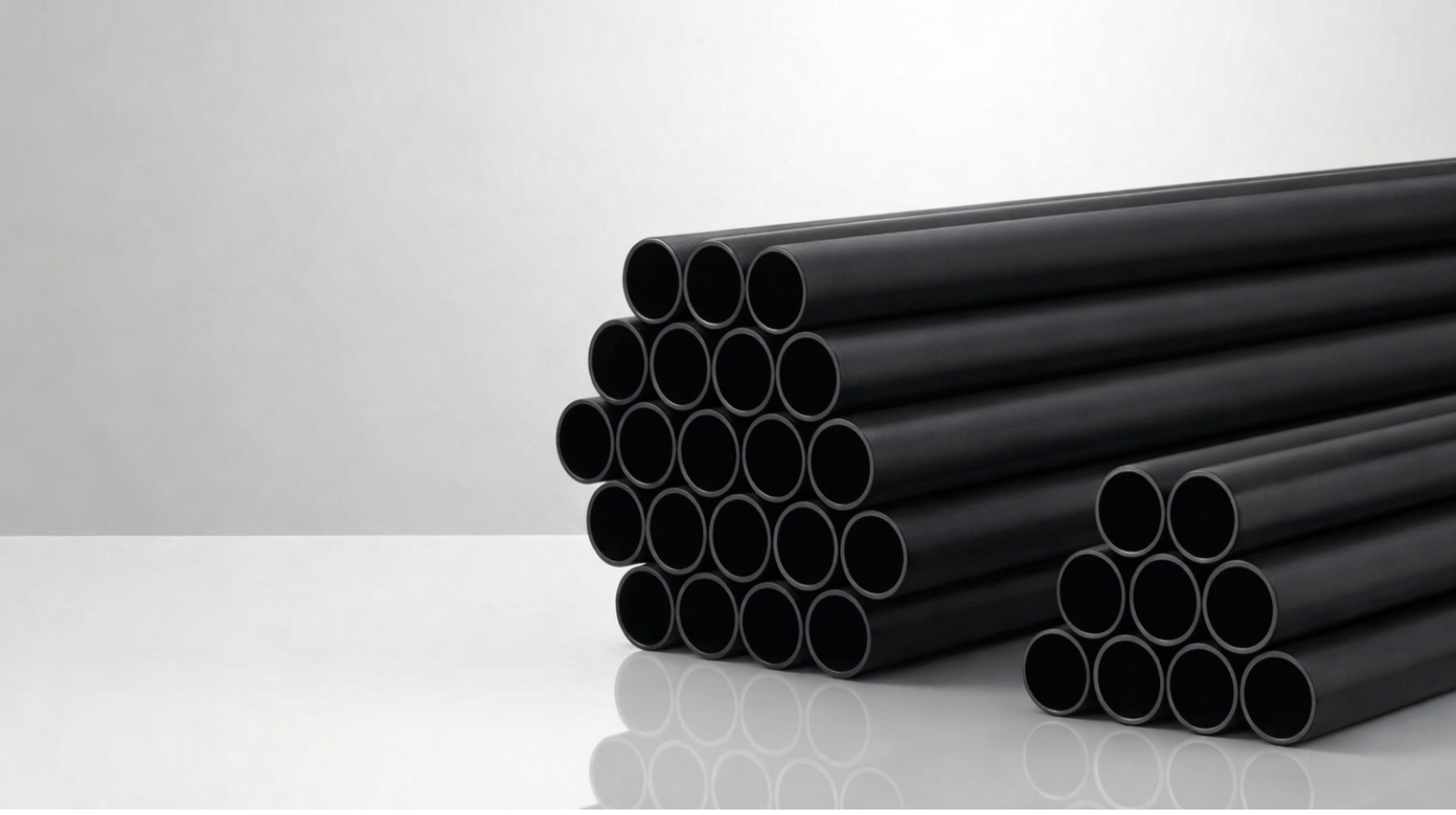
MS & Carbon Steel Pipes
Why MS & Carbon Steel Pipes Matter for Indian Industry in 2026
India's infrastructure and industrial sector is expanding at a pace unseen in decades. Under the National Infrastructure Pipeline, over 9,000 projects worth ₹111 lakh crore are being executed — and MS (mild steel) and carbon steel pipes are the circulatory system of virtually every one of them.
From fire-fighting lines in commercial buildings to API 5L transmission pipelines in refineries, from structural hollow sections in flyovers to IS 1239 plumbing in municipal water networks — the right pipe, correctly specified, is the difference between a project that delivers and one that fails inspection or requires costly rework.
At Vijay Sales Corporation, we have been supplying industrial pipes, valves, and fittings to contractors, EPC companies, and government projects across India since 1995. This guide distils 25+ years of application experience into a practical reference you can use at the project specification stage — not just at the procurement stage.
What Are Mild Steel (MS) and Carbon Steel Pipes?
Mild Steel (MS) Pipes - Mild steel pipes are manufactured from low-carbon steel containing 0.05–0.25% carbon. This low carbon content delivers high ductility, excellent weldability, and easy on-site fabrication — making MS pipes the workhorse of general-purpose industrial and construction applications.
Carbon Steel Pipes - Carbon steel pipes contain 0.26–2.1% carbon, which increases hardness and tensile strength significantly. They are classified into three grades:
Low carbon steel (0.26–0.60%): structural and general pressure applications
Medium carbon steel (0.61–1.00%): mechanical parts, pressure vessels, boiler tubes
High carbon steel (1.01–2.10%): high-stress applications such as springs and cutting tools
Types of MS & Carbon Steel Pipes Available in India
1. ERW (Electric Resistance Welded) Pipes
Produced by cold-forming steel strips and welding the seam using electric resistance, ERW pipes are the most commonly used pipe type in India for general applications. They offer consistent wall thickness, good dimensional accuracy, and are available in a wide size range.
Best for: water supply, gas distribution, fire-fighting lines, structural fabrication
Standards: IS 1239, IS 3589, ASTM A53 Grade A/B
Size range: 15 NB to 600 NB
2. Seamless Pipes
Manufactured without a welded seam by extruding a solid billet over a mandrel, seamless pipes offer superior strength and uniformity. Seamless Pipes are the preferred choice for high-pressure and high-temperature environments.
Best for: refineries, petrochemical plants, power generation, steam lines
Standards: ASTM A106 Grade B, API 5L Grade B/X42/X52, IS 1978
Key advantage: no seam weld means no weak point under cyclic pressure
3. SAW (Submerged Arc Welded) Pipes
SAW pipes are used for large-diameter applications where high weld quality and structural strength are critical. Available in longitudinal (LSAW) and helical (HSAW) variants.
Best for: water mains, oil pipelines, structural piling, offshore applications
Standards: API 5L, IS 3589
Sizes: 400 NB and above
4. GI (Galvanised Iron) Pipes
MS pipes with a hot-dip zinc coating that provides excellent corrosion protection. The galvanised layer acts as a sacrificial barrier, protecting the base steel even where the coating is scratched.
Best for: drinking water supply, plumbing, irrigation, outdoor exposed installations
Standards: IS 1239 Part 1 (Light, Medium, Heavy duty)
5. Black Steel Pipes
Uncoated MS pipes used primarily where subsequent painting, wrapping, or internal lining will be applied — or in applications where corrosion is not a concern.
Best for: fire sprinkler systems (with red oxide paint), gas lines, oil distribution
Note: must not be used for drinking water without internal lining
Key Standards & Grades for MS and Carbon Steel Pipes in India
Always specify a standard on your purchase order. Without a standard reference, you cannot hold a supplier accountable for material properties, dimensional tolerances, or pressure ratings. Here is a quick reference:
| Standard | Scope | Common Grades | Typical Application |
|---|---|---|---|
| IS 1239 | MS welded tubes — water, gas, steam | Light / Medium / Heavy | Plumbing, fire-fighting, gas distribution |
| IS 3589 | Steel pipes for water & sewage | Fe 330 / Fe 410 | Municipal water mains, sewage lines |
| IS 1978 | Line pipes — oil & gas | Grade 1 / Grade 2 | Onshore oil & gas pipelines |
| ASTM A53 | Welded & seamless steel pipes | Grade A / Grade B | General pressure service, steam |
| ASTM A106 | Seamless carbon steel — high temp | Grade A / Grade B / Grade C | Boilers, refineries, steam lines |
| API 5L | Pipeline specification — oil & gas | Grade B, X42, X52, X65 | Oil & gas transmission pipelines |
| IS 2062 | Hot rolled structural steel | E250 / E350 / E410 | Hollow sections, structural fabrication |
MS ERW Pipe Weight Chart (IS 1239 — Heavy Series)
This reference chart covers the most commonly ordered sizes from Vijay Sales Corporation's stock. Weight per metre is calculated as per IS 1239 tolerances. Use this for material take-off and freight estimation.
| NB Size (mm) | OD (mm) | Wall Thickness (mm) | Weight (kg/m) |
|---|---|---|---|
| 15 NB (1/2") | 21.3 | 3.25 | 1.44 |
| 20 NB (3/4") | 26.9 | 3.25 | 1.87 |
| 25 NB (1") | 33.7 | 3.25 | 2.41 |
| 32 NB (1¼") | 42.4 | 4.00 | 3.84 |
| 40 NB (1½") | 48.3 | 4.00 | 4.41 |
| 50 NB (2") | 60.3 | 4.50 | 6.19 |
| 65 NB (2½") | 76.1 | 4.50 | 7.93 |
| 80 NB (3") | 88.9 | 4.80 | 10.10 |
| 100 NB (4") | 114.3 | 5.40 | 14.50 |
| 125 NB (5") | 139.7 | 5.40 | 17.90 |
| 150 NB (6") | 165.1 | 5.40 | 21.30 |
Note: Weights shown are nominal. Actual weight may vary ±10% per IS tolerances. For weights in other schedules (SCH 80, SCH 160) or seamless pipes, contact our technical team.
Industrial Applications of MS & Carbon Steel Pipes
Oil, Gas & Petrochemicals - Transmission pipelines, refinery process lines, and petrochemical plants rely on seamless API 5L and ASTM A106 Grade B pipes for safe fluid transport at elevated pressures and temperatures. Vijay Sales Corporation has supplied API 5L Grade B pipes to contractors working on city gas distribution networks across NCR.
Construction & Infrastructure - IS 2062 structural hollow sections and IS 1239 ERW pipes are specified extensively in high-rise construction, bridges, stadiums, and metro rail projects for columns, bracings, and scaffolding.
Fire-Fighting Systems - IS 1239 black steel pipes are the standard specification for wet riser, sprinkler, and hydrant systems per NBC 2016. Vijay Sales Corporation is a stocking distributor of IS 1239 pipes for fire-fighting contractors across Delhi NCR — available in Light, Medium, and Heavy series.
Water Supply & Irrigation - IS 3589 and IS 1239 GI pipes serve municipal water distribution, overhead tank connections, and agricultural irrigation networks. For high-pressure irrigation mains, we supply MS ERW pipes with internal cement lining or FBE coating.
Power Generation - Thermal and nuclear power plants use ASTM A106 Grade B seamless pipes for boiler feed lines, steam mains, and heat exchanger circuits where operating temperatures can exceed 500°C.
Chemical & Pharmaceutical - ASTM A106 / ASTM A53 pipes with appropriate internal lining or flange connections are used in process piping for chemical plants that handle non-aggressive media.
How to Select the Right MS or Carbon Steel Pipe: Buyer's Guide
Pipe selection is a five-variable decision. Get any one wrong and you risk either over-specification (wasted cost) or under-specification (safety risk or project rejection). Here is a disciplined approach:
1. Define Operating Pressure & Temperature
This is the most critical variable. Seamless pipes are mandatory above 80 bar or 400°C. For low-to-medium pressure applications (below 25 bar, ambient to 250°C), ERW pipes are sufficient and considerably more economical.
2. Identify the Fluid or Gas
Potable water: IS 1239 GI pipe (zinc coating is safe for drinking water)
Fire-fighting: IS 1239 black ERW pipe (NBC 2016 compliant)
Oil & gas: API 5L Grade B or above, seamless preferred
Steam: ASTM A106 Grade B seamless
Corrosive chemicals: consult for lined or coated options
3. Select Pipe Size (NB) and Schedule
Nominal Bore (NB) determines flow capacity. Schedule determines wall thickness and pressure rating. Always confirm with a hydraulic calculation — do not size pipes on rule of thumb for critical applications. Refer to the weight chart above for IS 1239 sizes.
4. Specify the Standard
Always state the standard on your RFQ and purchase order: IS 1239 Medium, ASTM A106 Grade B, API 5L Grade B, etc. This protects you commercially and ensures you receive tested, certified material with mill test certificates (MTCs).
5. Choose Surface Finish / Coating
Black (uncoated): fire-fighting, gas lines, structural (to be painted)
Galvanised: water supply, outdoor installations, plumbing
Epoxy/FBE coated: buried pipelines, corrosive environments
Internally cement-lined: water mains requiring smooth flow
6. Verify Lead Time and Availability
Standard sizes (15 NB to 150 NB in IS 1239 Medium) are typically available ex-stock from Vijay Sales Corporation in New Delhi. Larger sizes, seamless pipes, and non-standard schedules may require mill procurement — plan a 3–6 week lead time for these.
Advantages & Limitations of MS and Carbon Steel Pipes
| Advantages | Limitations |
|---|---|
| High tensile strength — withstands high pressure and mechanical stress | Prone to external corrosion without coating or galvanising |
| Excellent weldability — easily joined, modified, or extended on site | Heavier than PVC or aluminium — increases installation and freight cost |
| Cost-effective — best value per unit strength for most applications | Not suitable for highly acidic or strongly corrosive media without lining |
| Wide size range — 15 NB to 1200 NB readily available in India | Requires regular inspection and maintenance in corrosive environments |
| 100% recyclable — supports sustainable procurement | Higher thermal conductivity than plastic — requires insulation for hot lines |
Why Vijay Sales Corporation? Our Commitment to Your Project
When you source pipes from Vijay Sales Corporation, you are not just buying material — you are buying 25+ years of application experience that protects your project from costly specification errors.
| What We Offer | Details |
|---|---|
| Complete range | MS ERW, seamless, SAW, GI, and black steel pipes in all standard sizes and grades |
| Certified brands | Jindal Hissar, Jindal Star, Maharashtra Seamless Limited — with original MTCs |
| Standards compliance | IS 1239, IS 3589, IS 1978, ASTM A53/A106, API 5L — we verify before dispatch |
| Technical support | Our team reviews your specifications and flags errors before you place the order |
| Single-source supply | Pipes + valves + fittings + flanges — consolidated procurement, one supplier |
| Competitive pricing | Direct relationships with Jindal and Maharashtra Seamless ensure mill-competitive rates |
| Pan-India delivery | We supply to project sites across India with proper packing and marking |
Frequently Asked Questions (FAQ’s)
1. What is the difference between ERW and seamless pipes?
ERW pipes are manufactured by welding a rolled steel strip along a longitudinal seam. Seamless pipes are extruded from a solid billet with no weld joint. Seamless pipes offer higher pressure ratings and uniformity, making them preferred for critical high-pressure applications. ERW pipes are more economical and perfectly adequate for water supply, fire-fighting, and structural use.
2. Which pipe standard is used for fire-fighting systems in India?
IS 1239 (black steel, Medium or Heavy series) is the standard specification for fire-fighting pipe networks per NBC 2016 and TAC guidelines. The pipe must be hydraulically tested and suitable for operating pressures up to 17.5 kg/cm². Vijay Sales Corporation stocks IS 1239 black pipes for fire-fighting contractors.
3. What does API 5L Grade B mean?
API 5L is the American Petroleum Institute specification for line pipes used in oil and gas transmission. Grade B designates a minimum yield strength of 35,000 psi (241 MPa) and minimum tensile strength of 60,000 psi (414 MPa). Higher grades (X42, X52, X65) indicate higher yield strength for demanding high-pressure transmission applications.
4. How do I decide between MS ERW and GI pipes for water supply?
For potable water (drinking water) supply where the pipe will be exposed to moisture or buried, GI (galvanised) pipes are preferred because the zinc coating prevents internal and external corrosion and is safe for drinking water. For industrial water lines that are not potable and will be internally coated or lined separately, black ERW pipes are acceptable and more cost-effective.
5. What is the minimum order quantity for bulk pipe supply?
For standard IS 1239 ERW pipes in common sizes (25 NB to 100 NB), Vijay Sales Corporation supplies from single bundles (approximately 1-2 tonnes). For larger projects requiring 50 tonnes or more, we offer direct mill procurement with competitive pricing. Contact us on WhatsApp at +91-9999889008 with your requirement.
6. Do you provide Mill Test Certificates (MTCs) with your pipes?
Yes. All pipes supplied by Vijay Sales Corporation from Jindal Hissar, Jindal Star, and Maharashtra Seamless Limited come with original manufacturer Mill Test Certificates confirming chemical composition, mechanical properties, and hydrostatic test results. We do not supply pipes without documentation for critical applications.
7. Can you supply IS 1239 pipes in custom lengths?
Standard pipe lengths are 6 metres (per IS 1239). Custom cut lengths can be arranged for project requirements above a minimum order quantity. Speak to our team to confirm availability and lead time.
Conclusion: Making the Right Choice for Your Project
MS and carbon steel pipes remain the backbone of India's industrial and infrastructure landscape — from the smallest fire hydrant riser to the longest oil transmission pipeline. The range of types, standards, and grades available today means there is always an optimal solution for every application, budget, and lead time constraint.
The key is specification discipline: identify your operating conditions, select the right standard, specify it on your PO, and work with a supplier who can verify and certify what they deliver.
Vijay Sales Corporationhas been that supplier for contractors, EPC companies, and government project offices across India since 1995. Whether you need 10 metres of IS 1239 Medium pipe for a maintenance job or 500 tonnes of API 5L Grade B for a city gas distribution project, we bring the same technical rigour and accountability to every order.